

Nick Murphy
CLAIRE
I start these conversations with a fairly open question. You can take it in either direction, and then we will see where it leads us. The first question is inspired by the name The Curious: what are you currently curious about?
NICK MURPHY
It's a good question. I have a somewhat morbid answer, but it is an honest one: recently, I have been very interested in death. That sounds heavy, and I am not entirely sure why. It is not that I think death is cool; I have always found skulls, crossbones and things like that a little tacky. But there has been this strange theme of death in my life recently. I suppose I am interested in it because it is something we all experience at some point.
CLAIRE
That's true.
NICK MURPHY
I am reading a book called Japanese Death Poems at the moment, which is very interesting because it presents so many different attitudes towards death. I do not have much insight into why this has become such a theme for me, but it has. I have been writing songs about it,which is unusual because death has never really been a subject for me before, and I have also been having strange dreams about it. That is probably what I am most curious about right now.
CLAIRE
Is your curiosity more about what happens after death, or about how we encounter it?
NICK MURPHY
In a strange way, I think it is about our relationship not only with death, but also with the dead. Sometimes we forget people, but in other ways we do not. How do they continue to exist with us? And how do we approach our own death if it is something we all have to face? Do we avoid it, or do we rush towards it? Death defines almost everything we do, yet we do not talk about it; we avoid it. I also recently released a record that is all about love, not only romantic love, but the concept of love itself. I wonder whether death is a response to that.
Once you have explored love, where do you go next? Death may be the next great subject.
CLAIRE
It's super interesting.
NICK MURPHY
I do not know. I am still guessing because the idea has not fully taken shape, and I have been wondering what is going on. It also feels as though we are witnessing the death of many things in the world right now: capitalism, the political rules, based order, perhaps even social media. Many of the promises of the 1990s and 2000s that we invested in are crumbling. Looking back at different attitudes towards death may therefore be useful to us. But, as I said, I am still guessing. I have also been having some very strange dreams.
CLAIRE
Do you write your dreams down afterwards, or do you simply remember them? Do you wake up thinking, "What was that?"
NICK MURPHY
I dream a lot, constantly. Last night, I dreamed about a river. I do write my dreams down. About two months ago, while I was on tour in the United States, I had a particularly intense dream. It may be a little heavy for the podcast because it is also about death. In the dream, I was at a festival where an old man died.
CLAIRE
Did he die at the festival?
NICK MURPHY
At the festival, on a small stage. I think he had been performing, and then he died. Everyone simply left. A few of us stayed because we felt that we needed to wrap his body rather than leave him there. Afterwards, I found myself carrying this dead man around backstage, looking for somewhere to put him, while the other people who had helped gradually disappeared. The festival was still full of people, and everyone reacted differently, mostly with indifference or disgust. One intoxicated American raver said, "Whoa, is that a dead body, dude?" I said yes, and he asked whether he could touch it. I said, "I guess." Other people said it was gross.
I kept looking for somewhere to place the body. At one point, I sat near an extreme, sports area with ramps and skateboarders doing tricks. Some kids poured water on me as a joke while I was holding this corpse.
CLAIRE
You remember it in great detail. So, it must have really struck you.
NICK MURPHY
It was really intense.
CLAIRE
Wow.
NICK MURPHY
We can move on from death, although we are now talking about dreams.
CLAIRE
No, this is exactly why I am so interested in asking what you are curious about: the answer can be literally anything.
NICK MURPHY
Dreams are another thing I am curious about. Perhaps that takes us away from the more morbid subject.
CLAIRE
That is a perfect segue. Before this conversation, I told a few people that you were joining us and asked what they would want to know. Someone said they are always interested in what musicians imagined they would do when they grew up. Did you always think you would become a musician, or did it happen more randomly?
NICK MURPHY
It depends on the age. I was not really interested in music until I was a teenager, but after that I somehow knew. It was naive and probably egotistical, but I was very certain, and by luck it ended up happening. I have a brother, Oscar, who is a year and a half younger than me. When I was about 16, I typed up and printed a contract, sat him down very seriously and said, "Listen, when I grow up, I am going to be a famous musician, and I want you to play bass in my band. If you sign here, I promise to keep you in the band."
CLAIRE
And what's he doing now?
NICK MURPHY
He is now a doctor of clinical neuropsychology and conducts advanced research. At the time, he must have thought, "This guy is crazy. What is he talking about?"
CLAIRE
What did you imagine doing before music? You said the answer depends on your age.
NICK MURPHY
I simply meant that I was not one of those people who knew at four years old that they would make music. I was interested in computers, and when I was very young, I loved drawing. My school once sent me to a camp for talented young artists, where I met children from other schools who were also good at drawing. The experience made me realise that drawing could be quantified and that I was now ranked as "good." It also showed me that many of the other children were better than I was. I suddenly felt that drawing was something I was expected to be good at, so I stopped after the camp.
The seriousness of it ruined it for me.
CLAIRE
Perhaps it became too serious.
NICK MURPHY
Exactly. I saw that some of the other children were better than I was, and I became aware that drawing was now something I was expected to be good at.
CLAIRE
What is your earliest memory of making music?
NICK MURPHY
I remember going to piano lessons when I was very young, perhaps in second grade. I did not like practicing, and the teacher would come in and tell me off because I had not been playing my scales. But I first began making music when I was 15. It happened almost overnight: I decided I was going to be a musician, and it became a total hyper fixation and identity change. I asked my grandmother to buy me a guitar for my fifteenth birthday, and I started making beats on my computer using a loop program called Acid Pro. I also tried to dress like Bob Dylan.
CLAIRE
Amazing. Many years later, it all seemed to happen quite quickly. How did that come about?
NICK MURPHY
A great deal happened in between. I attended a private school that is considered prestigious now, although it was not at the time. Sometimes, when an institution is not particularly important, it has a lot to prove. The school took itself very seriously and treated music as a hobby rather than a viable career. When I said that I wanted to pursue music, the careers counsellor told me to keep it as a hobby. I have no regrets, but that advice did stop me from pursuing it at first. After school, I enrolled in a Bachelor of Arts because that is often what you do when you do not yet know what you want.
No offence to anyone with a Bachelor of Arts.
CLAIRE
What was the Bachelor of Arts in? Did you have to choose a particular field?
NICK MURPHY
In Australia, I think you take a general first year and choose your specialisation later. Literature may have been one of my subjects, but I do not remember clearly. I was drinking the entire time.
CLAIRE
You have suppressed the memory. You went through it and then forgot the whole thing.
NICK MURPHY
My memory is poor for large parts of my life. I remember specific moments and melodies, but I often lose the chronology. I have to write things down and organise photographs and journals to make sense of it; otherwise, I place events in the wrong order. At the time, I was also drinking heavily and was something of a party animal. I eventually became sober and enrolled in a technical college to study audio engineering. That was the first time I considered that becoming a successful musician might not be the most realistic career plan, although I could still work in music. I studied audio engineering for two years.
Then my cover of "No Diggity" went viral on music blogs, and everything became crazy. I began receiving emails from labels and offers to perform. I was 23 and had no idea what was happening.
CLAIRE
There was also something about a Super Bowl commercial.
NICK MURPHY
That happened as well: the song was used in a Super Bowl commercial. Within about 18 months, I went from making music on a computer in my mother's garage to appearing on Ellen and Jimmy Kimmel, touring the world and featuring in a Super Bowl advertisement. It was extremely intense. I was nervous and anxious the entire time because I did not want to ruin the opportunity. Can I swear on this?
CLAIRE
Of course.
NICK MURPHY
I did not want to fuck it up. If I could speak to my younger self now, I would say, "Relax, dude. It is all good." I enjoy my job much more now than I did then because I can think, "None of this really matters, but it is cool that it is happening."
CLAIRE
Were you mainly afraid of failing, or of letting other people down?
NICK MURPHY
I was not afraid of letting anyone down because, at that point, I felt I had already let everyone in my life down. There was only room to move upwards. But music was the one thing I truly wanted to do and the only thing that made me happy. If I ruined that, what else would I have? Everyone tells you that you only get one chance and that success is this fragile, remarkable thing. In some ways that is true, but in others it is not. If you are an artist who makes art, you do it for your entire life. It is a lifelong practice.
The industry tells you that you have to reach a particular level, but I do not think that is necessarily true. When you are young, however, you do not know any better. I wanted to enter those rooms and meet those famous people. I did, and it turned out that I hated it. I have no interest in it at all; I would much rather simply make art. But I had to experience it to understand that.
CLAIRE
How long did it take you to realise that? Did you know after the first experience that it was not for you?
NICK MURPHY
It was strange. I will not name anyone, but I moved to the United States when I was about 25, one or two years after my first success, because Australia is so far from everything. At the time, there was a ceiling to what you could achieve in Australia, while success in the United States tended to ripple out to the rest of the world. I remember being invited to parties full of famous people I had seen in magazines. Everyone appeared to be friends, and I could not understand how they all knew one another.
Eventually, I realised that many of them probably did not know each other at all. Nobody had explained that, at that level, people sometimes simply pretend to be friends. I wondered how someone who had only just become famous could already be so close to a person who had been famous for years. Had they attended school together? I found the performance of familiarity strange because I did not know these people and did not want to walk up and hug them. There are benefits to that culture because creativity can become collaborative, and I do not want to dismiss it.
The United States has a particularly formulaic system in which parts of the creative process are outsourced to topline writers and other specialists. In a way, it is diplomatic because everyone is involved; it takes a village to build an idol. I wanted to understand that system, and it is very normal there, but it was not for me. I have always loved the idea that an artist can be your neighbour, an ordinary person with something to say or share. I dislike the idea of the artist as an unattainable god. It separates what human beings are capable of from ourselves, when we should be able to recognise some of that possibility within us.
CLAIRE
That is why I find it so interesting to look behind people's journeys and stories. The goal is to make these paths more accessible and less mysterious, so that listeners might think, "This could be something I can do as well." Of course, practical factors also matter, including financial resources that not everyone has.
NICK MURPHY
That financial barrier has become much more significant. I have worked professionally in music for about 15 years. When I began, almost anyone could still find a way in, but since the pandemic it has increasingly become a rich person's game. It is now considered normal to lose money on some tours. I can sometimes absorb that cost, although I have had to change how I work. But how many 22, year, olds can easily lose ten, fifteen or twenty thousand dollars on a six, week tour? Who has that kind of money to burn?
CLAIRE
For sure. That's crazy.
NICK MURPHY
It is. Music is unusual because everything is compared on the same stage. Someone releases an amazing music video, but the budget may have been a quarter of a million dollars. Everyone says Beyoncé was incredible at Coachella, and she was, but the budget was two million dollars. Give me two million dollars and you will probably enjoy my Coachella performance too. It becomes a strange money game. That only applies at certain levels, of course, but I have trained myself to consider what something cost. Expensive output alone no longer impresses me. An ambitious idea can still be wonderful even when it is expensive, and there are artists who do that well.
Personally, however, I am more interested in what someone can achieve with meagre means. Is the idea strong enough to make the budget irrelevant?
CLAIRE
How long did it take before you were able to live from your music?
NICK MURPHY
It happened relatively quickly. Within a year, I was able to leave my job because I received a publishing deal that came with an advance. Touring, however, did not make any money for the first year and a half, particularly because I was playing support slots. At the time, the industry standard was about $250 per show. It may be closer to $450 or $500 now. I try to pay supporting artists more, but that is how the finances are structured. Back then, the attitude was that this was simply what you had to do if you wanted to succeed.
Today, I try to book younger artists as support whenever possible, because the path that worked for me would be extremely difficult to follow now.
CLAIRE
You produced, wrote and engineered the album yourself. Did it take about two years?
NICK MURPHY
They say your first album takes a lifetime to write. In practical terms, mine took about two years.
CLAIRE
Did you do everything yourself because you wanted that control, or because you did not have the financial resources to involve other people?
NICK MURPHY
The financial aspect helped, and one reason I have been able to sustain this as a career is that I can do so much myself. But I am also stubborn, and I become frustrated when people charge me a great deal for something I believe I could do better. That pushed me to learn how to mix music, edit videos and handle other parts of the process. I think every artist should understand the work they are paying someone else to do and know why that person can do it better. Still, my decision was not primarily financial. I simply did not know how to make music any other way.
I built tracks slowly, pulling different elements together until they made sense. I might program the drums so they sounded as though they were in the same room as the bass, but that took a long time because I was learning as I went. I did not know how to recreate that process in a professional studio or explain it to other people. Early in my career, I had the opportunity to work with Rick Rubin at Shangri-La. It was essentially my first time working in a studio as the artist. I had never worked with a room full of people, let alone in a place where Neil Young, James Blake and Lana Del Rey were nearby.
The doors were left open, so whenever the engineers played one of my demos, I thought, "Neil Young can hear this. Turn it down. It is not ready. This is terrible." The engineers would ask what I wanted to do, and I had no idea how to answer. I had never needed to articulate what I was trying to create, and I did not know the vocabulary. I was also very introverted. Experience has taught me how to speak to people, but at the time I did not know how to handle unfamiliar conversations or how I was expected to behave. My instinct was to withdraw.
In a room full of famous people and engineers asking what I wanted, all I wanted to do was run away. Those experiences still feel unreal to me. The stories do not sit at the front of my mind; they surface unexpectedly. I might suddenly remember meeting Jake Gyllenhaal, or being in a stairwell with Katy Perry at the ARIA Awards, and think, "Did that really happen?" My brain struggles to place those moments in reality.
CLAIRE
Is that because those moments felt like an out-of-body experience?
NICK MURPHY
I think the experiences were so unfathomable that my brain could not process them. When I performed on Ellen, I almost blacked out. I can watch the recording and see a huge, foolish smile on my face, but I barely remember the performance or Ellen hugging me afterwards. It is an entirely different experience when it is actually happening. I think it was simply too much for my brain to process.
It was exciting, and perhaps forgetting parts of it was my brain's way of dealing with the intensity. Those opportunities were fun, and everyone told me how extraordinary they were, so of course I wanted to explore them. Some people may judge an artist for doing more commercial or pop-oriented things, but almost anyone would investigate those opportunities if they were offered. People may claim that it is all lame, but if Coldplay or U2 invites you to dinner, you are probably going to go.
CLAIRE
Of course.
NICK MURPHY
That was the experience. I learned many things, but the biggest lesson was that the entire system is largely invented. It is still special because of its power to reach people, but everyone involved is ultimately just a person. The ones who truly believe they are somehow above others are the people I would avoid; many others are simply good people who happen to occupy that position. You should respect the influence your work can have on others. When someone tells you how important a piece of music has been to them, the right thing to do is be present and listen, even if you cannot fully comprehend their experience.
CLAIRE
That is fascinating. You made music as Chet Faker for a long time, but then you stopped using the name.
NICK MURPHY
It was after the Shangri-La thing, basically. The Shangri-La experience was not the sole reason, but about two weeks later I returned to New York and decided to retire the Chet Faker name.
CLAIRE
But why?
NICK MURPHY
There were many reasons. The biggest was my growing sense that much of the industry was hollow. I still wanted to make music, but the hunger surrounding the Chet Faker project felt almost rabid. I could not tell whether people were responding to the soul of the music or to its commercial success and financial potential. That applied both to the public and to people within the industry. Changing the name was a way to shed the commercial skin while continuing to create. I was deliberately difficult, but it achieved what I wanted. When everyone expects something pleasant and familiar from you, confusing them can become appealing.
Confusion can be a gift because it forces people to consider what is happening rather than accepting everything at face value. Many great artists created that kind of mystery; Bowie was the master of it. I was only 25, still finding my footing as an adult, yet I was already internationally established. It felt as though everyone knew exactly who Chet Faker was and what kind of music I was supposed to make, even though I had released only one album. Music had always represented freedom and self, expression to me, but the success had turned it into a cage. I felt expected to become whatever other people said the project was.
Changing the name allowed me to test what would happen if I dismantled the branding. If Ferrari changed its name, would people still love the cars, or did they only love the name?
CLAIRE
It depends on the rebranding strategy.
NICK MURPHY
Exactly. There was not much of a rebranding strategy, but the result was interesting. Many people immediately lost interest, which suggested that they had been following the marketing fever rather than the music. Others stayed, and the change strengthened their connection to the work. It cut away some of the excess and added substance.
CLAIRE
And how was the experience as Nick Murphy then?
NICK MURPHY
It was interesting. I remember the announcement that I was changing the name, although making a formal announcement was not something I particularly wanted. I simply wanted to release music, but everyone around me insisted that I could not do that without explaining it. In retrospect, I could have ignored them, but I was 25 and surrounded by advice. If I could advise my younger self now, I would say: do not listen to anyone.
CLAIRE
That's good advice.
NICK MURPHY
Do everything you want to do, because everything I regret came from listening to someone else. I swear to God.
CLAIRE
Was that advice coming from people close to you, or from people in the industry?
NICK MURPHY
It came from everyone. That sounds counterintuitive, but I am instinctive by nature and wish I had trusted my instincts more. At the same time, I like how everything ultimately worked out, so perhaps I would not change it. When the name change was announced, I felt an enormous weight lift and was elated for about a day. Then I began exploring musical spaces that were deliberately different from what I had done before. The early Nick Murphy material was tense and intense. I became interested in stagecraft that deliberately made audiences uncomfortable because I was pushing back against the idea that Chet Faker was simply chilled, pleasant music that never challenged anyone.
I probably took that reaction too far, but experimentation is how you discover where the limits are. For the first time, I felt opposed to the audience. Many people had come because they loved the Chet Faker material. They said they were open-minded, but I could feel what they wanted. I played some of those songs begrudgingly and almost began to hate my own work. It was an intense period, but also a beautiful one because I realised that this was now my profession: I was an artist. I had expected the success to disappear and, in some ways, I was trying to make it disappear.
I was afraid of losing what I had achieved, and I disliked living with that fear, so I decided to set it on fire and see what remained. What remained was the creative impulse. I methodically destroyed the success in order to shed the fear of losing it. People said it was the stupidest thing I could have done for my career. That was precisely the point.
What did I think was going to happen? The audience also changed and became noticeably more male. It had previously been fairly balanced, although the front rows were usually filled with women. During the Nick Murphy period, the front rows became predominantly male. There was also tension, and I sometimes found myself disliking the audience.
CLAIRE
Interesting.
NICK MURPHY
It was a fascinating period. I worked under my own name for about six years, became much freer and formed a fully live band, whereas the Chet Faker material had been more electronic. Everything I explored during those years influenced where I am now. Using another name created a safe space in which I could experiment uncomfortably without damaging the more delicate identity of the Chet Faker project. That was also part of the point.
CLAIRE
Would you say the toughest part of success was the feeling that the work no longer belonged entirely to you?
NICK MURPHY
Yes. I had believed that being an artist meant always being free to define yourself. I did not want to be defined by other people. But because I achieved such a high level of success so early, on the strength of one record, I felt I had been defined before I had the chance to define myself. That was extremely difficult. The very thing that defined and limited me was something everyone said I should be grateful for. I kept wondering why the luckiest and best thing that could happen to me was also making me so sad. In some ways, it had stunted what music was for me: an act of self, definition.
I eventually learned that there is a difference between being an artist and being a professional artist within society. I had assumed that music would always be pure self-actualisation. Once you share your work, however, you also have to honour the experience of the people who receive it, and that can conflict with self-actualisation. If I make something you love but I dislike it, whose experience takes precedence? My self-actualisation may require me to say that I dislike it, while your experience of the work is equally noble, sacred and true. I was learning that music was not only about what I wanted, even though my younger, more egotistical self-believed it was all about me.
CLAIRE
But now you've returned. Chet Faker has returned.
NICK MURPHY
I'm back.
CLAIRE
He's back. How did that happen?
NICK MURPHY
I retired the Chet Faker name around 2015 or 2016 and began releasing music as Nick Murphy. The decision became a much larger talking point than I expected, and I spent years avoiding questions about why I had done it or what the plan was. An honest explanation would have required me to tell the press that I disliked much of the system they represented, which would not have helped me. Instead, I described the change as a new expression or a different sound. That was vaguely true, and I may have believed it at times. Then 2019 became an extraordinarily difficult year.
I lost a great deal of money, faced financial problems, was sued by people I had previously worked with and separated from my manager. The stress caused me to lose so much weight that I looked skeletal. In 2020, I was living in a small apartment on the Lower East Side, near Chinatown, when the pandemic began. A month later, my father died unexpectedly of a heart attack at 61. Strangely, after the intensity of 2019, both the pandemic and my father's death felt almost manageable. I thought, "The world is ending and my dad is dead, but that is all right. I can handle it." New York was the centre of the pandemic at the time, and the people around me developed a reckless, end-of-the-world mentality. We saw one another every night, although we were not socialising with anyone outside the group. Everyone seemed miserable, and the world itself felt miserable. I started thinking about the bright colour I had stored away in a box: the Chet Faker project. I had removed it for selfish but important reasons because I needed to understand who I was. Now it occurred to me that everyone was unhappy, and I had a source of happiness in a box that I was not using.
The pause in touring also gave me the first opportunity since I was 22 to step back and ask whether I even liked this career or wanted to continue. I was afraid to ask because I did not know what I would do if the answer was no. I had also fallen out of love with making music; it had begun to feel like an intellectual exercise rather than the thing that once lifted me out of dark periods. During 2020, I began gently rebuilding my relationship with art and creativity. I stopped trying to manufacture a hit and returned to making music alone in a small studio, as I had done for the first Chet Faker album.
Within five or six months, a collection of songs appeared almost by itself. I looked at it and realised that the album was essentially complete, even though records usually took me about two years. It also felt unmistakably like a Chet Faker record. My pride was at stake because I had publicly declared the project dead and begun releasing music under my own name. I knew some people would criticise the reversal, and some did. But I decided that did not matter. As my father used to say, "If you cannot change your mind, you cannot change anything." Changing my mind was also a way of reclaiming control.
So, in a sense: fuck you guys. The album already existed, and it clearly felt like a Chet Faker record. There was so much misery in the world that I felt compelled to share it. I released "Low" as the first single. The song was about feeling unwell while still believing that things would improve. Making the record had helped me through grief, isolation and the strange experience of missing my father's funeral because I could not travel home. I felt that if the music had helped me, withholding it from other people would be wrong. Once the secret was out, it felt good, and people were genuinely happy. We were also beginning to emerge from the pandemic and play shows again. None of it followed a master plan. I am very instinctive and willing to change my mind.
CLAIRE
Which is a good thing.
NICK MURPHY
Even now, there is a common misunderstanding that I have simply returned to being Chet Faker. It is not a choice between one identity and the other; I have continued to release work under different names. Those identities are useful hats. The commercial music industry is rarely interested in small projects that do not generate significant revenue, strange demos, limited vinyl releases and similar experiments. Different names give me the freedom to make those things while still participating in the larger industry when I choose. The return of Chet Faker was not planned. I made a record that belonged to the project and had to choose between withholding it or honouring what it was and facing the response.
That period also answered my larger question: I do want to make music, even though there are aspects of the profession I dislike and choose not to participate in. I do not usually do podcasts, for example.
CLAIRE
Here we are.
NICK MURPHY
But this is nice. After almost ten years, I was able to return with a clearer understanding of how the industry works. I knew what I did and did not want to do, what the consequences of those choices would be, and the terms on which I wanted to continue. I decided to work very hard to make good music and art for people, and to honour the people who listen to it. It felt like a second round. The pandemic gave me the gift of a pause and allowed me to reset my intentions. At 21, I thought I understood what success meant, but I did not.
CLAIRE
You cannot fully understand it at 21.
NICK MURPHY
No. You imagine that success will simply mean everyone saying nice things about you. But if the praise comes with an equal amount of negativity, you may eventually prefer to have neither.
CLAIRE
As a final thought, would you say your greatest lesson was learning to check in with yourself, to remain connected to what you are doing and to believe in it?
NICK MURPHY
I think this applies to any creative field. Society sells us the false idea that we have to "make it" and that, if we are not moving upwards, we must be moving downwards. That misunderstands what it means to be an artist. Creativity is not a sprint; it is a marathon and a vocation to which you dedicate yourself for life. It is easy for me to say that after achieving some success, but I believe it is true. Once you understand it, you can say no to opportunities. You do not always have to move upwards. If someone offers you access to a higher level but requires you to do something you do not want to do, decline it.
Your role is to make the art. The entire system works because creative people bring into existence something that did not exist before. Many intermediaries claim that they make people like the work, but none of those jobs or industries would exist without the artist creating something in the first place. If you continue making what you make, there will inevitably be periods when people are not interested. Even Bowie made some poor albums, but those are not what we focus on.
CLAIRE
No, and that is okay.
NICK MURPHY
He still felt compelled to make them.
CLAIRE
Exactly.
NICK MURPHY
Exactly. Once you realise that you may continue doing this until you are 70 or 80, and that people will sometimes like the work and sometimes will not, you can relax. When people demand a particular thing, you can decide that you do not want to make it and take your time instead. That was probably the greatest lesson, and I am still learning how to live by it. You probably never stop learning. You continue to go deeper into your craft and learn more about why you make things and what you are doing.
See more
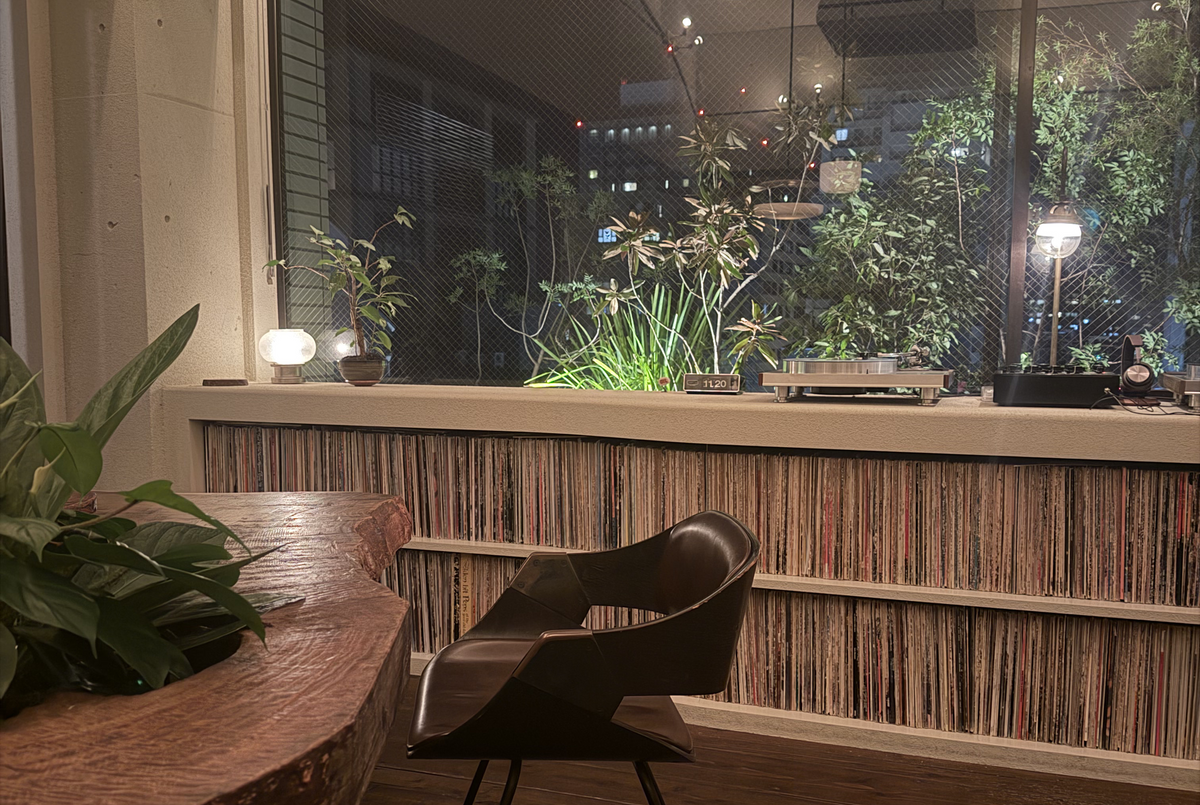
In a small listening bar in Tokyo, two lemon sours and a selection of unexpectedly sad songs turned into one of the most memorable evenings of Claire's trip. A reflection on giving up control, expe...
One book, one film and two albums on identity, expectations and the freedom to change.