

Laura Karasinski
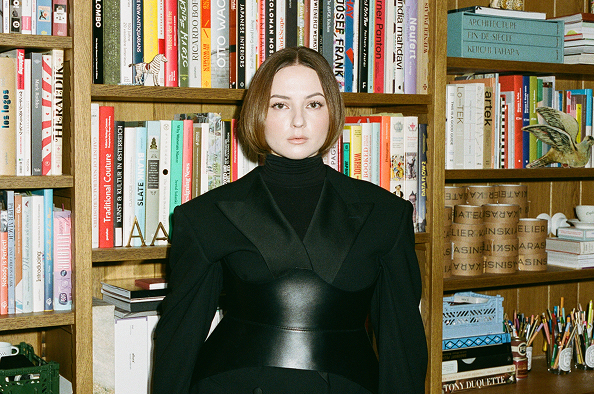
LAURA (HOST)
Hi, Laura. Welcome to the curious podcast. It’s really nice to have you here.
LAURA
Thank you, Laura. It’s nice to be here with you.
LAURA (HOST)
I wanted to start by saying that it’s lovely to have this conversation with you here for several reasons, one of them being that we share the same name. Do you also know many people named Laura?
LAURA
Yes, but they’re quite young. Compared to me, at least. There’s a fun fact about my name and my family.
LAURA (HOST)
Our name or your name?
LAURA
In this case, my name. Should we start with that? I was born in 1990, and my family is from Poland. When my parents named me Laura, my Polish family had never heard the name before. Whenever I visited them, they pronounced it differently, so for a long time that was what they called me. Eventually, they got the hang of it.
LAURA (HOST)
There are different ways of saying it. I pronounce my name in a slightly more Spanish way when I introduce myself, while the pronunciation is different in German and in other countries. Howdo you pronounce your name, or how do you prefer to be called?
LAURA
I think it depends on the country. Whenever I’m in New York and say that my name is Laura, a lot of people understand “Lola.” I actually like that. I can work with it.
LAURA (HOST)
Lola is a really nice name. I asked because I know so many people named Laura. When I was a teenager, I was a little annoyed about it. I wondered why my parents hadn’t been more creative, sorry, Mom and Dad. Now I actually like my name because I’ve never met a Laura I didn’t like. It’s a fun club to be part of.
That’s one reason it’s nice to have you here. The second is more obvious: we’re sitting in la maison today, which is the studio of the curious and, by day, the home of paper republic. It was alldesigned by you, so it’s wonderful that we get to sit here and have this conversation. You must have chosen everything here.
LAURA
We did, together with Ranee. Some people listening to the podcast will know Ranee, and others won’t. For those who don’t, she was the head of this whole project. Designing the space was a very close collaboration with her and the paper republic team. Of course, I had a great deal of influence over the team we chose, from the carpenter to the painters. Ranee, for example, chose the beautiful carpets. If I understood correctly, she grew up close to a family that makes carpets, so there was an emotional connection. I think that brings the story beautifully full circle.
LAURA (HOST)
How does it feel to be here today? Is it also a full-circle moment for you to be in a space you created, doing something completely different from what it was originally planned for?
LAURA
What I especially love about this place is that I also opened my showroom two years ago. I’ve had my studio for about 15 years, but two years ago I moved into a new space and designed it as an experiential showroom, somewhere you can touch, see, and experience everything with all your senses. You can walk through the space, from the kitchen to the powder room and the office, and everything is either vintage or designed by me.
It’s therefore very much in the spirit of la maison. Before we even knew each other, the idea for paper republic’s la maison had already been born, and it coincidentally had exactly the same style. It was beautiful how everything fell into place when we met. Being here feels very much like being at home.
LAURA (HOST)
That’s lovely. It’s also what we tried to achieve here, and it’s why we chose this space as our studio. You really made it feel comfortable, like a home. Thank you for that.
We like to begin this podcast with an open question: what are you curious about at the moment?
LAURA
That’s a good question. There are so many things.
LAURA (HOST)
Pick your favorite.
LAURA
It isn’t easy to choose. Does it mean right now, this week, or the things I’ve been curious about since I arrived on Earth? There are so many possibilities.
LAURA (HOST)
Let’s try today. Is there anything you’ve thought about today that sparked your curiosity?
LAURA
It may sound boring because it’s closely related to my job, but I was thinking about wall paints: the different kinds that exist and how they interact with room temperature and other conditions.
LAURA (HOST)
I don’t think that’s boring at all. That’s very niche knowledge, and I know nothing about it. How many different kinds of wall paint would you say you know?
LAURA
Seven.
LAURA (HOST)
That answer was so fast. Did you count them today?
LAURA
I did yesterday.
LAURA (HOST)
You came prepared. I think I would simply say “paint,” but I have no idea. It’s useful knowledge to have.
We’ve touched on the fact that you designed this place, so you’re a creator of things. It’s more than one thing, too, you’ve worked on many different projects. Was there a moment in your life when you thought, “I’m a creator,” or realized that you see and move through the world as someone who creates things? Let me know if that question is too vague.
LAURA
It isn’t; I’m just deciding how to approach my answer. The question has several layers. I choose to believe that every person is a creator in some realm. Every human being creates each day. The thoughts you think are your own creation. The way you dress is your own creation. The food you eat in the morning is your own creation. I think that by being human you create.
Beyond that, creating things is also my job. I describe myself as an interior designer. I’ve designed many different things over the past 15 years, but this year I decided to solely focus on interior design. At the moment, it’s my greatest passion among all the fields of design I’ve explored. That might change, who knows?
I was always the shy, quiet child painting in the corner at kindergarten and school. I was always drawing and creating. I never really thought about it; I just did what soothed me. Eventually, it became my job.
LAURA (HOST)
I also loved drawing as a kid and expressing myself artistically in different ways, as I think children generally do. Maybe we’re more connected to our creativity when we’re young.
I’m curious about what happened along your path between enjoying drawing as a child and, at 21, buying a 150-square-meter studio and building a career from it.
LAURA
I wish I could have bought it! I found it and rented it, and I still rent it. Vienna is a great place to rent.
LAURA (HOST)
Is it?
LAURA
Yes. I honestly think it’s better to rent than to buy in Vienna. Financially, I think it’s the better investment.
LAURA (HOST)
Why do you think that?
LAURA
Because I calculated it.
LAURA (HOST)
I would love to see that calculation. It’s something I’ve thought about too, and I haven’t reached a conclusion.
LAURA
It depends on many things: whether you have or want children, whether you have a family, and whatever your other parameters may be. In my case, at this point in my life, buying property doesn’t make sense. Buying is very expensive, while renting is comparatively affordable.
LAURA (HOST)
Let me ask my question from another angle. Your career as an interior designer, or as a designer of other things, is based on something very subjective. You decide what looks good together, what has character, and what stays in or leaves a space. When did you discover that your vision or taste was valuable to other people?
LAURA
Probably in kindergarten and school. During drawing class, other children would come to me and ask me to finish their pictures and make them prettier. They would paint something and then ask, “Can you embellish it? Can you finish it? Can you make it pretty?” I loved doing that.
Then, when I was about 17, I got my first paid job: drawing a tattoo for a friend.
LAURA (HOST)
Do you think that external validation helped build your confidence in your work and encouraged you to pursue it?
LAURA
Yes, for sure. There’s another angle to the question, and it’s what I was considering earlier when I was deciding how to answer. It also came from being a second-generation immigrant in Austria and spending my childhood between Austria and Poland. The place where I’ve spent the most time is probably the highway between those two countries, I know it by heart.
This is deeply connected to questions of where you belong and how you want to show up in a place. I always craved belonging. I wanted an identity of my own between those two places and cultures, because I believe Slavic culture is different from Austrian culture, for example. I had to carve out a space where I didn’t need to be only one or the other but could be both simultaneously.
My work helped me very much in finding that identity, until I reached a point where I realized I’m more than my work. It took me a long time. Only in the past few years I disconnected my personality from my work. Or at least I am trying to.
LAURA (HOST)
What happened to make that possible?
LAURA
I got very, very sick. And that makes you realize there is more than work. It started before that and I think the health issues were probably a manifestation of a lot of things. Still, I’m very grateful for that because I feel like I received a second chance at life.
Instead of achieving goals work wise, the new goals are: I just want to be a good person. I want to touch people’s hearts and be remembered as a good human being. Other than that, nothing is important.
LAURA (HOST)
That’s beautiful. Situations like that really put things into perspective. Does this second chance at life connect in any way to your intercultural upbringing between Polish and Austrian culture? Is there more room now to explore where you want to place yourself between them? Or perhaps not between them at all?
LAURA
Yes, actually. Just last week, I decided to take on a new project. My grandparents had a small summer place in a Polish forest. It’s nothing huge, just one of those typical summer houses older people got in the 1970s.
My grandparents were very dear to me; they were almost like the second half of my parents. I grew up a lot with them and spent much of my childhood at that summer house. Now I finally have the resources to rebuild it. It’s falling apart, it has been destroyed by Raccoons, and it’s badly worn down. Until now, no one had the time or resources to invest in it. I decided that I want to rebuild the place and that feeling again, where I also belong.
LAURA (HOST)
That sounds beautiful. You only decided to do it last week, and you already have a vision for it?
LAURA
Yes.
LAURA (HOST)
It must be a completely different kind of project.
LAURA
I’m building a house, and I’ve never done that before.
LAURA (HOST)
Are you taking the existing house down completely?
LAURA
I have to. It feels like a very adult thing to do.
LAURA (HOST)
From what you’ve just said, it sounds like the perfect moment to create a place that is truly yours. As children of parents who migrated, our lives don’t necessarily split, but we’re always part of two things.
LAURA
In Poland, I’m the child from Austria; in Austria, I’m the child from Poland. You’re never fully one thing.
I don’t know if it’s important to be one, I don’t now if that is necessary. But even if it isn’t necessary to you personally, people will still try to put you into a box.
LAURA (HOST)
What matters is learning to navigate it in a way that makes sense to you.
This seems like a beautiful moment to return and build something of your own, where you can bring that new mixture together. The house can simply be you, too. Perhaps I’m imposing my own ideas and significance on it, but that’s how I imagine it.
LAURA
It makes me very proud and happy to be able to do it. I know the place was very important to my grandparents, and it’s one token that I can keep.
LAURA (HOST)
Congratulations. It sounds like a big moment.
LAURA
Congratulate me when I’m finished. We’ll see how it goes.
LAURA (HOST)
Let’s go back in time. You’ve now reached a point in your life where you can take on this kind of dream project, but what was the beginning like when you first moved into the studio you rent - not bought!- ? Did you enter it with complete confidence that you could fill the space and with a clear vision for it?
LAURA
I was 21 and living with my parents. I had wanted to move out when I was 18, but my parents didn’t allow it because they didn’t trust that I could make it. Later, they apologized because I could have managed it.
LAURA (HOST)
It’s sweet that they apologized.
LAURA
Parents being parents. Three years later, when I was 21, it was finally OK. I already had my company and had been looking for apartments for about half a year. I thought it would be nice to have a small apartment and a small studio, but I couldn’t find the right places separately.
So I said whatever, I removed all the filters I had set on willhaben and decided to go big or go home, or, in this case, go big and go home. I found this big, 150-square-meter apartment that was way too expensive and way too big for me. But it was in a great district, not far from the university where I studied, and it somehow felt right. I simply had a feeling about it.
I asked my best friend whether he wanted to move in with me, and everything happened very quickly. We shared the apartment for six or seven years, until he moved out and I stayed. My company was there too, so it was working, living together, being young, throwing parties, and having sleepovers, everything.
I grew up in that apartment, and it grew up with me. It changed many times as I changed. It matured, changed colors, and even changed shape to some extent, just like myself. It was my first apartment, so it became my home base. Being there feels like recharging a battery. It’s my nest.
By chance, people saw it, and I got asked for home stories. Everything then evolved naturally.
LAURA (HOST)
What are home stories?
LAURA
Photographers come to your home, take photos, and write about the home and its interior design. At the time, I didn’t have a clue that I would end up as an interior designer. I simply designed things in my home in ways that felt right to me.
I should also mention that I grew up on construction sites. My dad is in the construction business, and I’m not exaggerating when I say that every childhood photo of me was taken on a construction site. I learned to ride a bike on one and learned to swim in the half-finished pool in my parents’ garden. It was so natural to me to to watch spaces develop and be created from nothing until they were finished.
LAURA (HOST)
Do you think that gave you the ability to imagine the potential of a space that is still completely bare?
LAURA
Yeah, for sure. That, and being neurodivergent, helps.
LAURA (HOST)
I think that’s one of the most impressive abilities. I don’t know how people do it.
LAURA
How do you see an apple if you think about one?
LAURA (HOST)
I see a green apple I think.
LAURA
Can you turn it around in your mind and see it from every angle and every side? Is it three-dimensional, two-dimensional, just a shape, or only an outline?
LAURA (HOST)
I’ve never fully understood this experiment. I think I can imagine the apple in my mind, but can I actually see it? I’m never sure whether I’m doing it correctly.
For our listeners, this is a small test of how you imagine things. You picture an object, in your version, an apple; in mine, a star, and ask yourself questions about how you see it. When you ask me, I think I can imagine an apple from every angle, so I suppose it’s three-dimensional. But I could never draw it from memory or place it somewhere in this room.
LAURA
I can’t physically build the spaces I imagine either. The carpenter builds them.
LAURA (HOST)
Fair enough, but you can imagine them. How do you see the apple?
LAURA
3D, like an object in a 3D computer program. I can rotate it through 360 degrees, move it around, and change its color.
LAURA (HOST)
I wish I could look inside your brain for a second and see the difference. I don’t know whether I could place my apple exactly where it should go, but it’s fun to try. I’m glad you asked me.
It’s an impressive skill. It’s interesting to know that you spent so much time on construction sites. Seeing them as a child was perhaps another factor that showed you how a room can begin with nothing and then be transformed.
LAURA
And I saw all the phases in between, as well as all the layers it takes to get there.
LAURA (HOST)
I have so many questions about your apartment, let me go back for a moment. When you and your roommate moved in, were the two of you able to afford it together?
LAURA
Yes. We had it together, that’s how we could afford it. Plus, I had my office as well in there. One room was my meeting room, another was both a workroom and dining space, and we had two separate bedrooms and our little sitting room, or TV room, or living room, however you want to call it.
LAURA (HOST)
Did you plan all of that, or did you simply go for it?
LAURA
I just went for it. There was never a thing I planned in my life.
LAURA (HOST)
Would you still do it that way now?
LAURA
Yes. The one thing I plan more consciously now is my finances. Other than that, I still think, “Let’s see what happens.”
LAURA (HOST)
Would you advise other people to do that, to simply start?
LAURA
Not necessarily. I think it depends on your character and personality type. I do believe there are types that are more fitted to be Entrepreneurs and the type that is fitted to be something else,work in a team or for someone or with someone. I want to say that one is not better or worse than the other.
I’ve noticed in different people that it’s closely connected to how comfortable they are with uncertainty and exposure. I can only speak for myself and my experience of self-employment, because I’ve never known anything else. I’ve worked for companies as a self-employed person, but I’ve never been on someone else’s payroll.
Sometimes I think, “I wish I could work for a big company and not have all the financial issues and other stresses that come with running a business.” So, being able to hold that, you need the strength to carry that. That’s why I wouldn’t recommend that everyone simply do it. You have to know if you are capable of the uncertain times that come with it and the stress. That doesn’tmean employed people don’t experience stress, of course, it’s simply a different kind.
LAURA (HOST)
I’m curious which of your characteristics make you suited to being an entrepreneur. I don’t think I’m suited to it, for example, although I couldn’t really tell you why. I also see a difference between the stress of being an entrepreneur or working for yourself and the stress of working for someone else. Both can be very stressful, but they’re different kinds of stress.
LAURA
I think that’s where I was heading earlier. When you’re your own boss, you have to be many people and fulfill many roles. I’m not only an interior designer or the person doing a podcast with you today. I’m also my own PR spokesperson, financial adviser, planner, product manager, and cleaner. There is so many parts that you have to fulfill.
You also have to set your own goals. I think if you’re employed, goals can be made for you by your employer. I’ve had employees myself, so I know what it’s like to have people work for me and to lead a team. As an employee, it can be nice to receive a bonus at the end of the year. When you’re your own boss, that doesn’t simply happen. You have to set those goals yourself, because no one will just come and pay you more unless you fight for it.
LAURA (HOST)
Of all the people you have to be, which is your favorite role?
LAURA
All of them.
LAURA (HOST)
Is there any role you like least?
LAURA
I don’t know. No.
LAURA (HOST)
That’s nice. It must be exciting to be able to switch between them. I’m guessing no two days of yours look the same.
LAURA
Yes. It’s very grounding to be a lot of different people. On the one hand, you get praised as this wunderkind and great designer, which I’m very grateful for, and there are beautiful magazine stories and so on. Then, at the end of the day, I have to be in my workwear on a Baustelle—a construction site. It’s like a kindergarten and a circus, and I love it. It’s very humbling and grounding. You get a taste of every slice of life.
LAURA (HOST)
That’s a really beautiful way of seeing it.
You touched on this earlier: I watched your TED Talk about being highly sensitive. Please let me know if I understood it correctly, but what I took from it is that you experience things like sounds, smells, visuals, and emotions more intensely.
LAURA
It’s so funny that you said that, because just this morning I was thinking about the TED Talk. It’s based on a book by Elaine Aron. I don’t know if she was a psychologist, but she wrote the book about her family, her children and relatives, I think, being highly sensitive. It turns out that she was describing neurodivergent people.
LAURA (HOST)
Can you explain what neurodivergent means?
LAURA
People on the spectrum: ADHD, autism, all of that. Even being bipolar is part of the wider spectrum. I’m somewhere on the spectrum.
LAURA (HOST)
So would you no longer describe yourself as highly sensitive?
LAURA
No. I actually wanted to write to TED and say, “Maybe we should change the title,” because people didn’t know this when the book came out. I read that book and thought, “That’s one hundred percent me.” Only later did they find out that her whole family is neurodivergent and that it’s based on how their brains work.
You can still say you’re highly sensitive. It’s simply a trait that a lot of people on the spectrum have in some form.
LAURA (HOST)
Should we still go into the TED Talk, then? I found some of the things you said in it really interesting.
LAURA
Yes, sure.
LAURA (HOST)
When did you discover that you see and feel things differently from other people?
LAURA
Always.
LAURA (HOST)
When you were drawing as a child, did you already know that it wasn’t the same for everyone else?
LAURA
No, I thought everybody saw like me and felt like me. Only later did I find out that wasn’t the case.
LAURA (HOST)
But you found that out while you were still a child?
LAURA
Yes.
LAURA (HOST)
It must have been interesting to realize that you have what you called, and I thought this was really beautiful, a superpower.
LAURA
It is, for sure. It’s the best asset I have for the job I do: feeling things, seeing things, noticing things, and having this ability for pattern recognition and hyperfocus. Thanks, brain.
LAURA (HOST)
Does it also affect the way you interact with people in your work relationships or the kinds of projects you take on?
LAURA
They say that people on the spectrum flock. We flock.
LAURA (HOST)
What does that mean?
LAURA
We get along. The people I don’t click with are probably neurotypical, which is okay.
LAURA (HOST)
What does neurotypical mean?
LAURA
People who aren’t on the spectrum.
LAURA (HOST)
Do you think neurodivergence relates to the part of the brain that also has to do with creativity?
LAURA
Yes, one hundred percent. I read a book about it called NeuroTribes. It’s about the history of neurodivergence and how it has always been part of humanity. Not only humanity, actually. In the animal world, there are animals that are more autistic than others.
LAURA (HOST)
Interesting. I love that kind of fun fact. Do you know how they discovered that? Did the book explain it?
LAURA
I don’t remember exactly whether it was from that book or a different book or source. But, for example, zebras...how did we land here?
Zebras! Because it’s my logo.
LAURA (HOST)
Yeah I was going to ask about your logo!
LAURA
Zebras and ... what’s the big bird?
LAURA (HOST)
An eagle?
LAURA
No. The one that’s like...
LAURA (HOST)
Ah, ein Strauss.
LAURA
Yeah. What’s Strauss in English? They make really big eggs.
LAURA (HOST)
It’s that classic moment when you know a word until you need it.
LAURA
It’s not a peacock.
LAURA (HOST)
I keep thinking of an orchid, but that’s a flower. But it’s something like this!
LAURA
Wait, I have it: ostrich.
LAURA (HOST)
Ostrich! Zebras and ostriches flock?
LAURA
Yes.
LAURA (HOST)
No way.
LAURA
We have to go back to the word “flock,” because there is another fun fact: Apparently, zebras have bad eyesight but kick seven times harder than a horse.
LAURA (HOST)
So they compensate for their bad eyesight with strong legs?
LAURA
Yes. Ostriches see very well. They have great eyesight but skinny legs. So I think if they get attacked, they protect each other because one sees and the other can kick.
LAURA (HOST)
That’s hilarious.
LAURA
Or something like that. Please don’t take me too seriously.
LAURA (HOST)
They do live in a similar habitat, so it would make sense.
LAURA
And I think with neurodivergent people it’s the same. Let us know in the comments. I mean, for example, autistic people are often more introverted, while people with ADHD are more outgoing. They complement each other, at least in my experience.
LAURA (HOST)
Is that really why your logo is a zebra?
LAURA
Yes. Not only, but also.
LAURA (HOST)
What’s the other reason?
LAURA
I was always drawn to the pattern, the black-and-white stripes. I think it comes from a dress my grandma was always wearing. It’s something I’m simply drawn to, and it’s nice. The zebra is also an awkward animal, in a beautiful way. It doesn’t quite fit. It’s like, “What is this striped pony?” A strong, striped pony. Yup, that’s me.
LAURA (HOST)
That’s so nice. I’m happy that you found your animal.
Speaking of patterns, I feel like a lot of what you do in your work is intertwined with beauty. Beauty is also very subjective, at least from my perspective. How did you figure out for yourself what’s beautiful? Did someone teach you?
LAURA
Great question. I do think beauty is universal. I do think there’s a blueprint for beauty, and a lot of people simply aren’t aware of it. At the end of the day, there are things everybody will find beautiful when they experience them in the right circumstances. For example lighting. I’ve never met a person that disliked comfortable lighting. Dimmed, warm light is beautiful.
LAURA (HOST)
It’s difficult because beauty is seen and felt in so many different ways, depending on what we’re talking about. When we’re talking about interior design, for example, can someone have bad taste?
LAURA
Yeah. A lot of people do, actually.
LAURA (HOST)
Who decides what’s good or bad taste?
LAURA
Every single person can decide that.
LAURA (HOST)
But you think there’s a universal beauty. Do you think that, if we really thought about it, we would come to the same conclusion about whether something is good or bad?
LAURA
I’ve always said there should be an ombudsstelle for good design. Take street signs, shop windows, or brick-and-mortar designs. There should be someone that checks it.
LAURA (HOST)
It should be you.
LAURA
Maybe. I could say, “No, this will make the street ugly. I’m sorry, you have to redo it.” But then again, that’s very undemocratic. I strongly believe in democracy, and I’m very much in favor of individualism, divergence, diversity, and everything, just to make that clear. I also think that being open to displaying things that are less standard beautiful can make something beautiful. Do you know what I mean?
LAURA (HOST)
I think I know what you mean. That’s where it gets complicated for me, because I start to wonder where taste comes from. Is it cultural? Is it based on what we’re exposed to? How do we develop our taste, and how do we decide whether it’s good or bad? I don’t expect you to answer that now, because it’s a very big question.
LAURA
I think there’s truth in everything. Taste is cultural, and what we grow up with influences it. But at the end of the day, I’ve never met a person who wasn’t fond of natural materials, fabrics that feel good, or rooms that smell nice. That’s the blueprint. There are some basic things we can cover.
LAURA (HOST)
So there’s an area we can all agree on, and anything above and beyond that comes down to individual taste.
LAURA
Exactly.
LAURA (HOST)
Have you ever thought something was ugly at first, but then it became beautiful to you?
LAURA
A lot of things.
LAURA (HOST)
What influences that process? What changes your perspective?
LAURA
Openness, getting older, and understanding what I said before: that you have to allow progress. In architecture, for example, there are many people who hate on brutalism. I find brutalism very beautiful. There had to be ugliness, and a war that destroyed beautiful old buildings, to allow new things to emerge. I’m not confident that every single brutalist building is beautiful, but a lot of beauty also stems from that time. We could never have experienced it if we hadn’t opened ourselves to the possibility of something new coming from what happened.
LAURA (HOST)
I thought about this question in relation to something a little smaller than war. I was thinking about myself and my relationship to trends. I’ve often noticed that I see something new coming up and initially dislike it. The last example were flat shoes, ballerinas. I used to love them as a child, and then they simply weren’t “it” anymore. When they came back and I first saw them, I really didn’t like them. But the more I was exposed to them, saw people wearing them, and had them advertised to me, the more I thought, “Maybe I should buy some flats again.”
In your opinion, how easily are we influenced by trends in relation to our taste?
LAURA
I don’t know how much people are influenced, but I’ve noticed that everything repeats itself anyway. Is it every seventy years or something? Everything happens again within seventy years.
LAURA (HOST)
I didn’t know there was a number, but yes, definitely.
LAURA
Although that doesn’t make sense: if the nineties are trending again, that wasn’t seventy years ago.
LAURA (HOST)
Maybe the cycles are getting shorter now.
LAURA
Maybe.
LAURA (HOST)
Perhaps it used to be seventy years, and now we just recycle things more quickly as our attention spans get shorter. So maybe it has more to do with the cycle of things coming and going and having to get used to things returning.
In this whole discussion, I also started wondering: how do you trust your own taste or intuition enough to do something before anybody else thinks it’s good?
LAURA
I don’t follow trends.
LAURA (HOST)
But you can set trends, right?
LAURA
That’s accidental. It’s not my work.
LAURA (HOST)
How do you find inspiration for the choices you make in your work?
LAURA
When it comes to interior design, the places tell me.
LAURA (HOST)
Okay. I’m just trying to imagine it because it’s a world that’s so different from mine. I’m very influenced by trends, and I’m curious about the other way of doing things. So you enter a space and don’t look for inspiration outside of it; you find it in the space itself?
LAURA
Yes, but it’s not that hard. We once worked on a beautiful old apartment in Vienna that was listed, denkmalgeschützt. We weren’t allowed to renovate it from scratch, which I appreciated because we had to work with a lot of beautiful built-in cabinetry, woodwork, and wood paneling. With a job like that, you have to carefully remove everything, preserve it, and then install it again. Once you take the panels off the walls, you see old wallpaper and old paint.
Before we started the work, I walked through the empty apartment and asked myself, “What kind of colors are here?” I was just feeling it. I often describe the moment when an idea comes to me as a download from above. I can’t explain it differently. It’s simply there, and I see those pictures.
LAURA (HOST)
I wish I had that.
LAURA
At the end of the day, it’s possibly the result of being chronically online, reading books, and living a life of always looking at things, which I do. If I’m bored and waiting for a cab, I sit in front of a house and really look at everything I can see: every single door, every line. I think, “Interesting, they put this like that.” It’s always a game. I’m never bored.
When I walk through apartments, it’s the same thing. It’s simply pattern recognition. In this example, by coincidence, chance, or fate, I chose almost exactly the same colors for all the rooms that had been there two hundred years ago. At the time, everything was painted white.
LAURA (HOST)
How did you find out?
LAURA
We scraped the walls, but I’d chosen the colors first. Once we started scraping, we discovered that I’d chosen almost the exact same color for every room. I don’t know how I could have known. It was just a feeling. Perhaps the person who designed it before had the same download, and then I had it too.
LAURA (HOST)
That’s crazy. When you look around at all these buildings, do you save this information and later reuse it in a space you enter?
LAURA
I hope so. I don’t know if I’m that conscious of it, but definitely. Everything you see, touch, smell, and experience influences and shapes you.
LAURA (HOST)
Maybe it happens more subconsciously for some people than it does for you. You described it as a game. To me, it sounds as though you’re constantly learning and absorbing information that you can use again, which is great.
LAURA
And exhausting at the same time.
LAURA (HOST)
I can imagine.
In all the years of your career, is there a mistake you would describe as the best one you’ve made so far? Your favorite mistake?
LAURA
So many mistakes.
LAURA (HOST)
Your favorite mistake?
LAURA
Founding a company, I guess.
LAURA (HOST)
In what way was it a mistake?
LAURA
I was twenty-one when I founded my company. It only happened because I was studying at university and, as I mentioned before, I got my first jobs because people had seen my work. Somebody told me, “You have to watch out, because at some point you’ll have to pay taxes.” There’s a limit to how much money you can earn, and I was far away from that limit back then. But I thought, “Okay, I need to go to the Chamber of Commerce.”
I got out of class very quickly, and the Chamber of Commerce was right next to my university. I had about ten minutes between two classes, so I thought, “Let’s go.” I went in and told the woman at the counter, “I have no idea how to open a company. I just want information about how to do it. I’m studying this and that, and I want to do this and that. Can you please tell me at what point I should officially say that I own a company?”
She said, “Wait a minute.” Half an hour later, she came back with two pieces of paper and said, “You’re a company now.” I thought, “Okay, I guess. Thanks.”
LAURA (HOST)
Which part of that was a mistake?
LAURA
I wish I’d had more time. Maybe I would have had it anyway, but everything went so fast that I didn’t apply for subsidies. There are a lot of bonuses available to young entrepreneurs starting their own companies, and I didn’t use any of them.
LAURA (HOST)
And you couldn’t apply for them later?
LAURA
You can’t anymore. I tried.
LAURA (HOST)
That’s the thing about subsidies as well: there are so many, and it can be difficult. Which ones would you have liked to use?
LAURA
To be honest, I don’t know because I didn’t explore it further. It’s simply the one thing where I think that, if I’d put a little more time and effort into researching it, I could have made the beginning a little easier. It felt so easy, and then you learn the hard way.
LAURA (HOST)
There are so many subsidies that can be helpful, but they don’t necessarily make them easy to find. Or maybe they do, if you actually go looking for them. That’s also an option.
I have one last question for you, unfortunately. Time flew by. What would you tell someone who knows what they’re drawn to but doesn’t know how to begin pursuing it?
LAURA
In my experience, and again, this comes from someone who’s never done anything else, so take it with a grain of salt, just do it for yourself. If you don’t have the perfect project, try it on your own. If you don’t have the perfect client, do it for yourself, for a friend, or for your mom. Find a way to play, test, and use trial and error. You’ll find out whether it’s what you want to do. I think that’s a good way to go.
LAURA (HOST)
So, essentially, just try it.
LAURA
Just try it. What’s the worst that can happen? You try and it doesn’t work out. At least you know. There’s no growth in not trying. Is there any other way?
LAURA (HOST)
Procrastinating.
I think the reason I ask this question is that the beginning often feels the most difficult. You can overthink it, and there are so many things that could go wrong in your head. At the end of the day, that’s why it’s so important to hear from someone like you, who’s already made it this far, that your advice is still simply to do it, and to do it for yourself. Did I reword that correctly? I don’twant to take your words and twist them. But I think that’s such a beautiful lesson to pass on to people.
LAURA
I think you live and you learn, and life is for living and learning. If you never try, you’ll probably never find out.
LAURA (HOST)
That’s a very fair point.
LAURA
So go. Fuck around and find out. Sorry, can I say that?
LAURA (HOST)
You can. It’s the perfect ending to this: fuck around and find out. Now I can also say it. Thank you so much, Laura, for joining us for this conversation. It was truly fun.
LAURA
Thank you. Thank you for having me.
See more
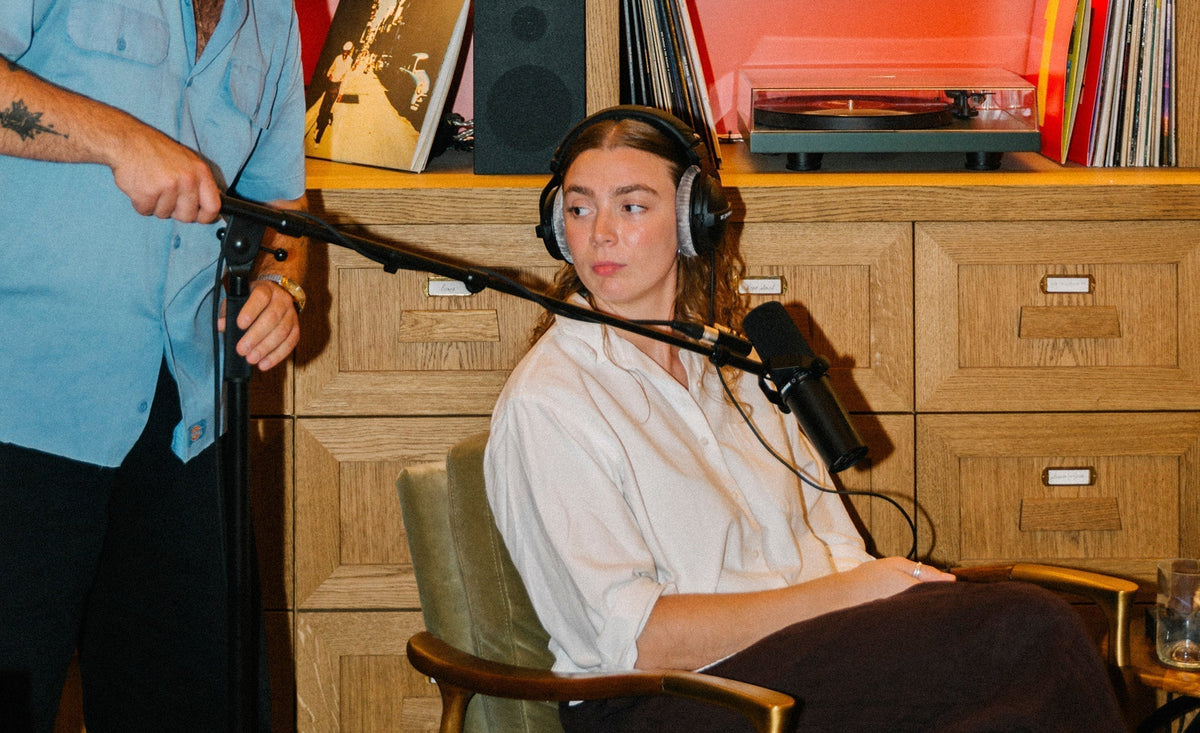
Claire shares how the curious came to be, from the first idea sparked by a conversation about the future of paper republic to figuring out what the platform should be, building it along the way and...
Laura reflects on what her conversation with Laura Karasinski taught her about creativity, instinct, and learning to notice more.